
What are variant covers, and why do they make otherwise rational adults lose sleep and money? If you are new to comic collecting, you have probably walked into a shop, picked up a new Batman Vol. 4 #1, and realized there are twelve different covers for the exact same book.
Welcome to the modern comic market. It is exciting, it is overwhelming, and if you aren’t careful, chasing variant covers will completely wreck your monthly budget. If you haven’t figured out your limits yet, stop right here and read my Beginners Guide to Comic Collecting before you spend another dime.
Let’s look at how this system actually works, and how you can get in on the hype without burning a hole in your wallet.
The Basic Logistics of a Variant Cover
At its core, a variant cover is just an alternate version of a comic’s front artwork. The story inside is exactly the same; only the outside outfit changes. Think of it like nasi lemak. You can get it with ayam goreng, or you can get it with sambal sotong. It’s still nasi lemak, but the topping changes the experience, and the price.
Publishers like Marvel and DC use variants for special events, to promote hot artists, or just to, well, sell more books to the same people. And honestly? We keep buying them.
Here is the standard inventory you will run into:
- Retailer Exclusives: Custom covers commissioned by and sold only through specific comic shops (like a Midtown Comics exclusive).
- Ratio Variants: The rare ones. A “1:25 ratio” means a shop has to order 25 regular copies just to get one copy of this specific variant.
- Blank Variants: Literally a blank white cover. You take these to conventions and pay artists to sketch on them.
- Foil/Holo Variants: Shiny gimmicks that look great on a shelf but are impossible to photograph without glare.
They don’t change the plot. But from an asset management perspective, they change the entire collecting game.
Why Collecting Variant Covers is Booming
In the modern comic market, variant covers aren’t just hype; they are a cornerstone of the hobby. There is a simple supply-and-demand logic to it.
Smaller print runs mean scarcity, and scarcity equals value. If you manage to track down a 1:100 ratio variant, that is comic gold. Beyond the money, there is the artistic appeal. When top-tier artists like Jim Lee, Alex Ross, or Peach Momoko do a variant run, it’s like curating a miniature art gallery for your home office.

Key issues that also happen to be rare variants can climb in price incredibly fast, assuming you don’t spill your morning coffee on them. Even if you aren’t planning to flip books on eBay, the thrill of the hunt is addictive.
Ask me how I know.
The Absolute Batman Variant Case Study
If you want a live example of how wild this gets, look at the DC Absolute Universe. Absolute Batman #1 dropped, sold hundreds of thousands of copies, and brought a massive wave of variant hunters with it. If you missed the boat, you can start with my Absolute Batman #1 review.
That single issue had some seriously tempting covers:
- The Jim Lee Sketch Variant: Hovering in the $10–$30 range.
- The Mark Brooks Foil Variant: Anywhere from $20 to well over $100 depending on the day.
- The 1:25 Ratio Variant: Prices are steadily climbing, especially if you get a CGC 9.8 grade.
If you’re just getting into collecting, watching a modern series like this is a smart way to learn the market. It’s widely available, the variants are well-documented, and it has that gritty Gotham charm.
Btw, I can see that there are more than 60 Absolute Batman #1 variant covers listed on League of Comic Geeks, and another 18 variants just for Absolute Batman #2. If you don’t set limits and can’t control the urge to catch ’em all, you will be broke before issue #5.
How to Collect Variants Without Going Broke
You do not need to sell a kidney to participate in this. Here is how I suggest running your variant logistics, based on all the expensive mistakes I’ve already made for you.
First, set a budget and stick to it. Beyond that, the rule I follow is simple: only buy what genuinely earns its spot on the shelf. Sometimes that’s a ratio variant because the print run is interesting. Sometimes it’s a connecting cover set because the full image is too good to break up. And sometimes it’s just because Peach Momoko, Jim Lee, or Dell’Otto did the art, and I’m only human. The point is, the reason for buying should be yours; not because some YouTube channel told you it’s going to triple in value by Thursday.
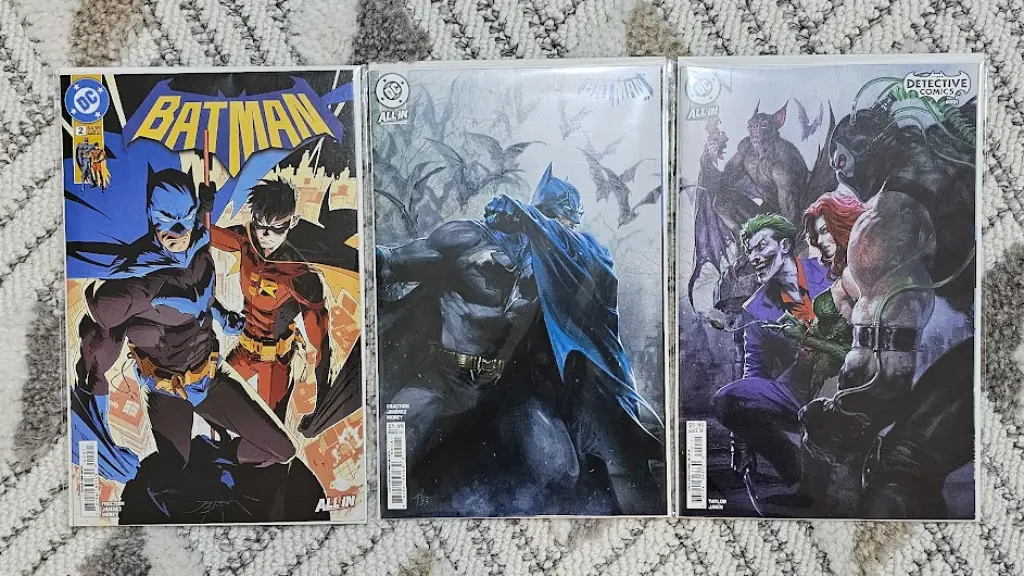
Here’s an example of connecting covers. On the left is Batman Vol. 4 #2 regular variant, while in the middle is Batman Vol. 4 #1 Gabriele Dell’Otto Connecting Variant, which connects with Detective Comics Vol. 3 #1101.
Second, protect your inventory. Use acid-free bags and boards immediately. They are cheap insurance. Store your boxes away from heat and direct sunlight, a Shah Alam afternoon hitting a comic box is a tragedy waiting to happen.

Before you drop $50 on a Peach Momoko variant, make sure you actually have something to put it in. Grab a fresh pack of Mylar bags and acid-free boards on Amazon.
Third, get off your tablet. You cannot truly enjoy collecting variant covers if you are only buying digital copies on Comixology, Amazon, or Marvel Unlimited. A variant cover is a physical asset. The whole point is seeing how a foil cover catches the light, feeling the heavier cardstock, and physically bagging it for the long box. A JPEG of a Jim Lee sketch variant is just an expensive screensaver.
Finally, build a relationship with your local comic shop. If they know you are looking for a specific variant, they might pull it for you before it even hits the shelf.
Quick FAQ for Beginners
What’s the difference between a variant and a reprint?
Variants change the cover art on the first printing. Reprints are subsequent print runs of the comic (second print, third print), which often get their own new cover art too.
Are all variant covers valuable?
Not even close. Some are $3, some are $300. Do your homework before treating them like a retirement fund.
Should I bother getting them graded?
CGC or CBCS grading is worth it for high-ratio variants or exclusive covers in flawless condition. For a standard $5 variant? Save your money and just buy a good top-loader.
The Bottom Line
Whether you’re chasing Absolute Batman ratio variants or just buying a cool Peach Momoko cover because it looks nice, variant covers are a great way to customize your collection. Start small, stay within your budget, and only buy what you actually want to look at.
That’s what keeps me enjoying the hobby. That, and writing about comics so my brain doesn’t melt from routing trucks and staring at SAP all day.
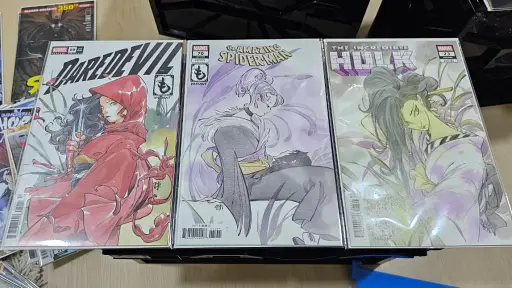
Here’s another picture of variant covers. These are from Superman Vol. 6, #23 by Nathan Szerdy and #28 by Tula Lotay.

What is the best variant cover you’ve picked up so far this year? Drop it in the comments.
Disclosure: This article contains affiliate links. If you choose to buy through these links, ComicsDeck may earn a small commission at no extra cost to you.
